
The 2025 Gartner AI Hype Cycle Report Recognizes Decision Intelligence as Transformational
Organizations today have more data than ever, yet they're increasingly stalled when it comes to taking action. Decision Intelligence (DI), a practical discipline that combines AI, data, and human expertise to drive better, faster decisions, is emerging as the solution.
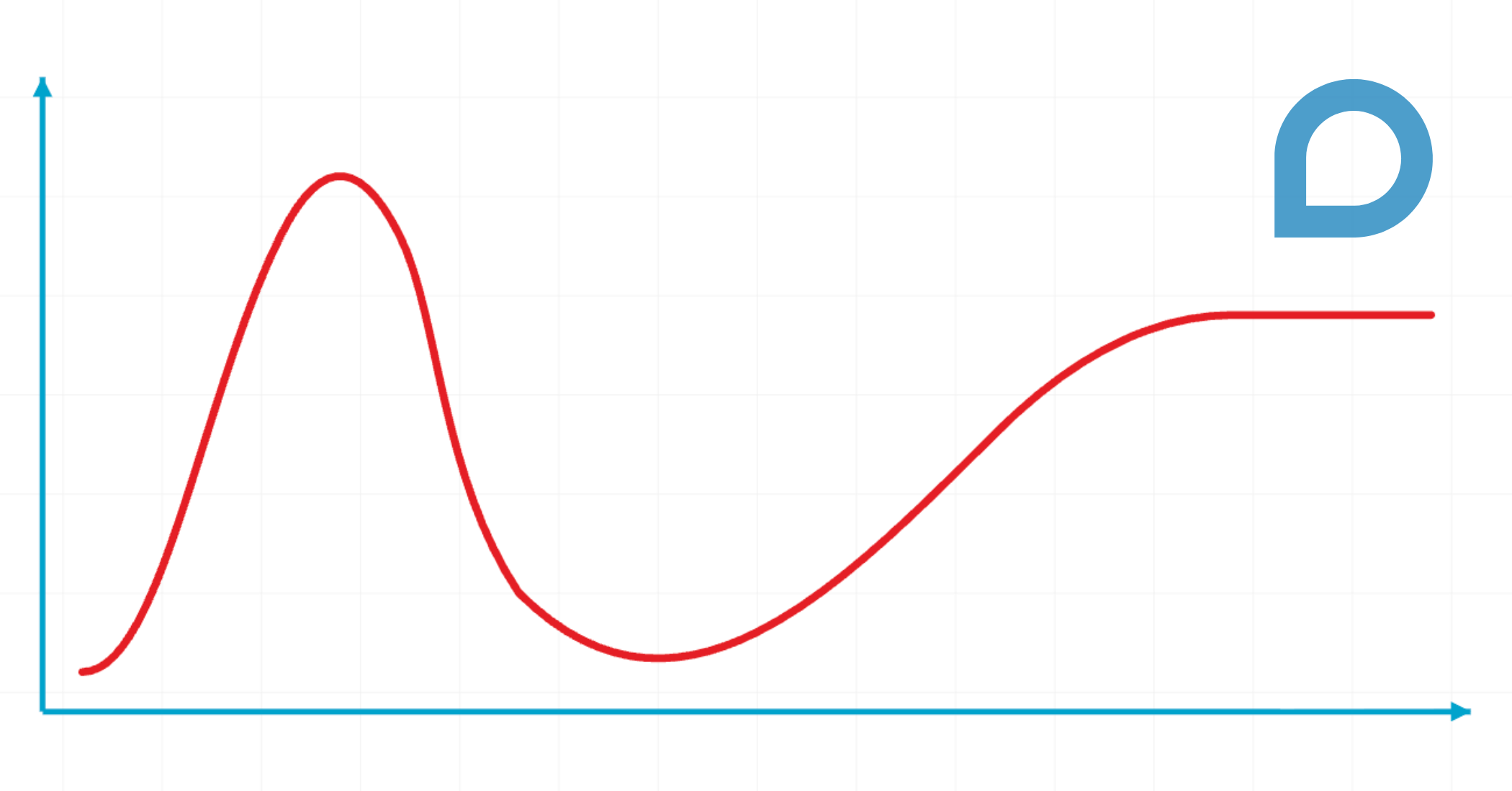
In its 2025 AI Hype Cycle report, Gartner designated DI as a "transformational" technology.
"Decision Intelligence (DI) is a practical discipline that advances decision making by explicitly understanding and engineering how decisions are made, and how outcomes are evaluated, managed and improved via feedback," according to Gartner. "By digitizing and modeling decisions as assets, DI bridges the insight-to-action gap to continuously improve decision quality, actions and outcomes."
Historically, decisions happen in departmental silos, rely heavily on intuition and past experience, and are rarely documented or systematically improved.
This fragmented approach went largely unnoticed because it was "good enough" in more predictable business environments.
Recent years have shattered that illusion. The rush to adopt GenAI revealed just how broken many decision-making processes really are.
Global disruptions, from supply chain crises to rapid market shifts, have highlighted the fragility of business processes built on implicit, ad-hoc decision-making.
What Gartner describes as "predigital, implicit, and suboptimal ways of decision making" are no longer sustainable. DI provides the framework organizations need to elevate decision-making from a hidden liability into a competitive advantage, turning insights into action that consistently drives growth.
Why the 2025 Gartner Hype Cycle Report Recognizes DI as Transformational
DI elevates how organizations make critical decisions under pressure. Instead of relying on gut instinct or lengthy committee meetings, DI enables faster, higher-quality decisions.
These decisions are more consistent, compliant, and cost-effective while still accounting for complexity and context. This drives the agility that's essential in newly volatile industries like CPG, pharmaceuticals, consumer health, and retail.
Beyond individual decisions, DI builds lasting capabilities across the entire organization. Rather than isolated departments making choices in silos, it embeds systematic decision-making everywhere. All teams follow consistent, proven approaches, creating better results for all stakeholders.
This systematic approach ensures decisions are effective. But the framework goes further. Decisions are also understandable and ethically sound. Most importantly, decision intelligence helps organizations deliver better, faster outcomes to everyone who depends on their decisions: customers, employees, investors, and partners.
Perhaps most critically, DI enables safe, scalable AI-powered decision-making. Many organizations struggle with AI risks like data governance or unreliable outcomes. The framework builds in safeguards from the start.
It ensures AI-assisted decisions are accurate, trustworthy, fair, and secure. This allows organizations to confidently deploy AI decision-making at scale without compromising safety or compliance.
Finally, DI treats decisions as reusable organizational assets. Rather than starting from scratch each time a similar situation arises, organizations build libraries of decision models.
These models improve with experience. Better decisions become predictable and scalable across the entire organization. This improves outcome predictability over time.
What's Driving Interest in DI
According to the 2025 Gartner AI Hype Cycle Report, several powerful trends are accelerating DI adoption. Organizations face unprecedented complexity from unpredictable disruptions and accelerating digital competition.
Traditional planning cycles that worked for decades simply can't keep up. Companies need decision models that can adapt in near real-time, not quarterly reviews that are outdated before they're implemented.
When marketing, operations, and finance make isolated choices without coordination, it undermines both efficiency and outcomes. A marketing campaign might conflict with supply chain capacity, or a cost-cutting initiative might damage customer experience. Organizations need cross-functional alignment on critical decisions and better ways to balance company-wide efficiency with local market needs.
Data overload is stalling action. Despite massive investments in "data-driven" tools and dashboards, most fail to connect insights to actions. Teams can see exactly what's happening, but they struggle to determine what they should actually do about it. This creates decision delays and makes it impossible to track whether choices actually improved outcomes.
As AI adoption accelerates, organizations need transparent and auditable decision models. There's mounting concern about accountability when automating decisions that affect customers, employees, and business outcomes. People want to understand how AI-assisted decisions are made and ensure they can be explained when things go wrong.
Regulatory scrutiny is intensifying. Data protection laws, AI governance requirements, and environmental mandates are compelling organizations to document their decision-making explicitly. Compliance teams need clear records of what decisions were made, why they were made, and how they performed.
Lastly, the technology is available. Modern platforms are converging decision process workflows, simulation, and optimization in ways that enable organizations to scale implementations.
GenAI is accelerating this trend by making sophisticated decision modeling and AI assistants accessible to business analysts without requiring deep technical expertise.
Industry Validation and Market Movement
The 2025 Gartner AI Hype Cycle Report classifies DI as an emerging technology two to five years from mainstream adoption, with current market penetration estimated between 5% and 20%. But DI is gaining traction across industries, with strong signs that the category is entering a critical growth phase.
Beyond earning "transformational" status in the main AI Hype Cycle report, Gartner has also highlighted Decision Intelligence applications in specialized areas. Notably, Cloverpop was recognized in Gartner's recent AI in IT Service Management Hype Cycle, specifically for its work with "AI Agents for Decision Intelligence."
This recognition highlights both the wide range of DI applications and Cloverpop's position among the specialized platforms delivering these advanced capabilities.
This versatility explains why DI is gaining momentum across such diverse sectors. Its principles apply wherever organizations need to make better, faster decisions — which is essentially everywhere.
Organizations have a critical window of opportunity. Those who move now can gain a significant competitive advantage. Early adopters will have refined their decision-making processes and built organizational expertise by the time DI becomes mainstream in two to five years.
With Gartner's validation and proven platforms like Cloverpop already delivering results, the momentum is clear. The question isn't whether DI will reshape enterprise decision-making; it's whether you'll be leading that transformation.
The 2025 Gartner AI Hype Cycle Report and the Future of DI
The 2025 Gartner AI Hype Cycle Report recognizing Decision Intelligence as a transformational technology comes at a pivotal moment.
Organizations are waking up to the fact that relying on intuition or past experience alone is no longer sufficient. Success will favor those that develop faster, more precise, and adaptable AI-powered decision-making processes.
DI provides the framework to achieve this transformation. Companies like Cloverpop are already helping organizations put Decision Intelligence into practice.
These platforms enable organizations to use AI to make more accurate decisions faster while maintaining strong governance and compliance — all essential for staying competitive.
The transformation is already underway. Organizations using Decision Intelligence are making better, faster decisions that drive measurable business outcomes.
Ready to see how Cloverpop can help your organization harness the power of DI? Request a demo today.