
How Decision Intelligence Enables Agentic AI to Create Real Business Value for the Enterprise
Agentic AI for the enterprise is scaling fast. According to McKinsey's State of AI in 2026 survey, 40% of large organizations are now scaling AI agents, up from 27% just a year ago. Yet despite widespread agentic AI adoption, most enterprises still can't point to a bottom-line impact.
Technical breakdowns explain part of the gap between agentic AI adoption and business results. Agentic AI is difficult to scale, and many systems never make it past the demo. But an agent can also work exactly as designed and deliver speed and efficiency without creating measurable results.
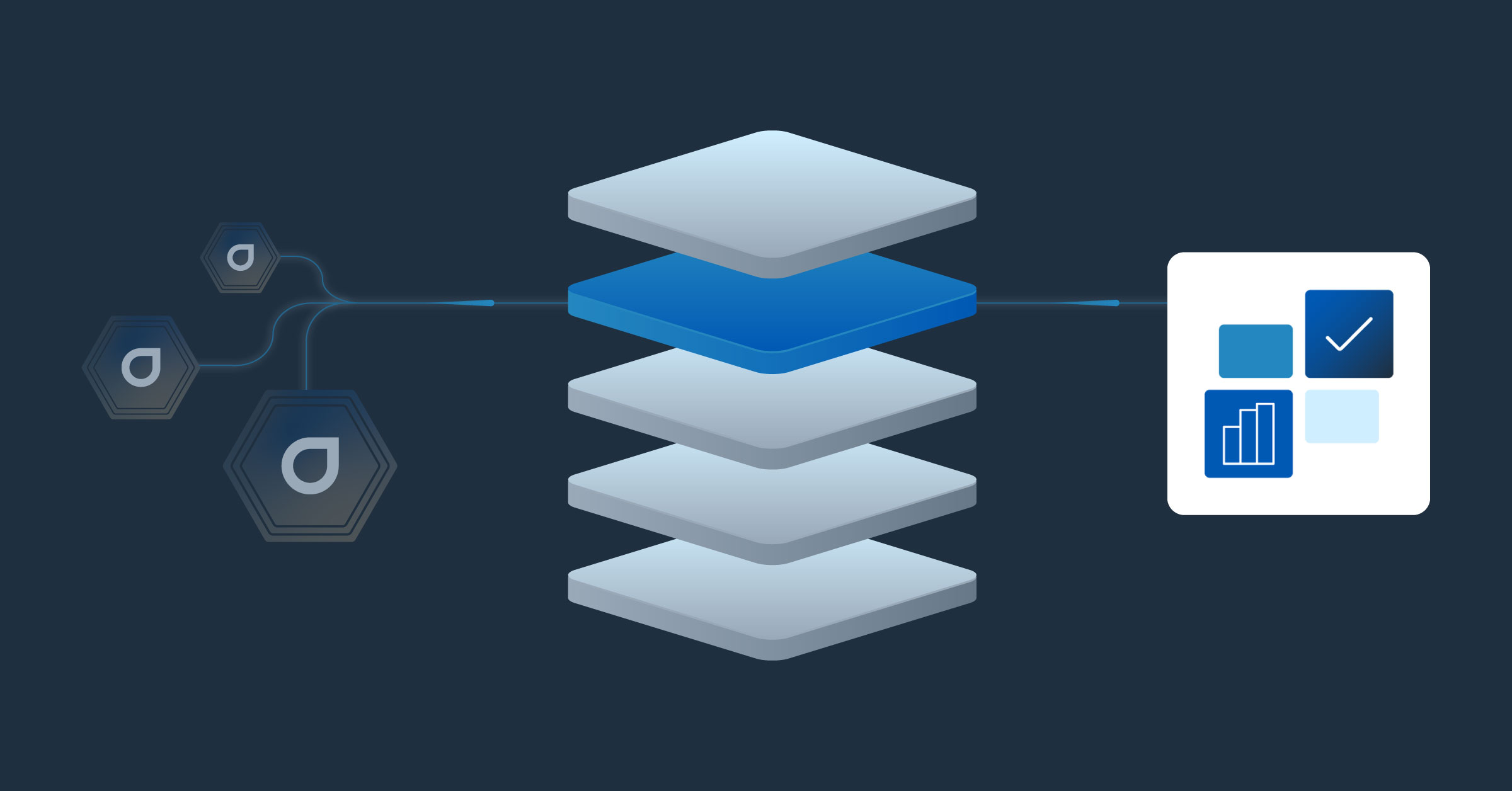
So what does it take for agentic AI to create real business value? Raid Arfua, Head of AI R&D at Cloverpop, points to the Decision Layer, the part of the enterprise AI stack that captures the decisions agentic AI makes or supports, and connects them to business outcomes.
"The Decision Layer is all about working with context and information in a decision-oriented way," Raid says. "That means decision structures, decision objects, and decision trees." In other words, it turns decisions into structured information: what the decision is, the reasoning behind it, who made it, and how it turned out.
Enterprises are scaling agents across more functions each year, but agents that can't show value don't last. Gartner predicts more than 40% of agentic AI projects will be canceled by the end of 2027, citing escalating costs, unclear business value, or inadequate risk controls.
Without connecting agents to enterprise decisions and measuring what they deliver, more agentic AI adoption only widens the gap between what enterprises invest and the returns they see. The Decision Layer closes that gap by capturing the decisions agents make, the actions that follow, and the outcomes they produce.
What Is Agentic AI for the Enterprise?
Agentic AI for the enterprise is the use of AI agents that operate within a company's existing systems, data, and governance to complete multi-step work and make or support business decisions at scale.
Deloitte describes those agents as autonomous systems that can "understand context, plan workflows, connect to external tools and data, and execute actions." Most are built on large language models (LLMs).
"Agentic AI is about the development of agent-based systems, and those systems can range in complexity," Raid says.
In its simplest form, it could be one call to the LLM to summarize something. From there, an agent might make several LLM calls in sequence. During this process, it may check and revise its reasoning, or call on an outside system, such as a data warehouse, a CRM, a planning platform, or a Decision Intelligence platform.
Agentic AI for the enterprise also differs from the consumer versions most executives already use, like ChatGPT or Claude, in three key ways. First, it has to operate reliably at scale, handling parallel requests from many users. Second, it has to integrate with the enterprise's existing systems of record, data warehouses, and governance frameworks. Third, it increasingly has to work with other agents as well as people.
Nearly every modern AI agent architecture has an LLM at its center. Around it are the tools, loops, reflection, and evaluation that shape what the agent can do. Every tool, step, and connection makes an agent more capable, but also adds new potential points of failure.
Agentic AI Risk: Where Enterprise AI Agents Break Down
Before an agent can create measurable value, it has to work. In the enterprise, that means clearing a set of agentic AI challenges, from technical performance to security.
Most agents never get that far. Many start as impressive demos and stall before they reach production. "I think maybe just 10% of agentic-based solutions will survive," Raid says.
-
Scaling Agentic AI From Pilot to Production
Under the hood, enterprise agents are backend services and face the same challenges as any other server software. A pilot might serve a handful of users, but running AI agents in production means handling many parallel requests, scaling automatically, and meeting performance requirements.
That jump from pilot to production is often where agents first stall. For the enterprise, a stalled pilot means sunk time and spend, and a business problem that's still unsolved.
-
AI Agent Evaluation
A demo shows an agent answering three to five well-chosen questions. In production, it faces questions nobody anticipated. The results might include hallucinations, wrong answers, and wrong numbers.
Rule-based systems were predictable but limited. Agentic AI systems can handle far more, but at the cost of predictability. That unpredictability is why AI agent evaluation has become its own discipline, with dedicated courses and tutorials.
For an agent to be ready for production, its quality has to be consistently high. "If it's good in 99% of cases, the quality is good enough, and the value will be there," Raid says.
Hitting that bar in testing is only the start. Since no test can cover every corner case, the real measure is how the agent performs once it's deployed.
-
Agentic AI Governance and Security
Before an enterprise can scale agentic AI, it needs confidence the system will act within the bounds of company policy. Two things can go wrong.
The first is the agent itself making a mistake. Because agentic systems are less predictable, an agent can give a response or take an action the business never intended, such as answering a question that should be off-limits.
The second is a matter of AI agent security. Some users will send questions designed to break the agent, try to extract information it shouldn't share, or use prompt injection to slip in instructions that override its rules. Teams test for these attacks during development, but no test catches every attempt.
Agentic AI governance addresses both risks. It starts with written requirements for what the agent should and shouldn't do, and those requirements vary by business domain, by company, and even by country.
Those requirements are then enforced through guardrails, which are parts of the system that block unexpected or harmful behavior, whether it comes from the agent or from a user trying to exploit it.
The Decision Layer: Where Agentic AI Creates Enterprise Value
Clearing all three hurdles produces a working agentic AI system. Return on that investment is a separate question. Many systems deliver real efficiency gains and lower costs while leaving growth and innovation largely unchanged. That is where the Decision Layer comes in.
The Decision Layer is the practical expression of Decision Intelligence, a discipline focused on structuring, capturing, and improving the decisions an organization makes.
"A decision doesn't appear from nowhere," Raid says. "It usually evolves from previous discussions. The rationale behind it can be hierarchical, with a number of different drivers and different people arguing for different parts. So it's quite a complex story."
What classical agentic solutions skip, the Decision Layer makes explicit:
- Which decisions were made
- Why they were made in the first place
- The rationale behind them
- The drivers and sub-drivers that fed into them
- The people or agents involved
- What actions followed
- Any measured outcomes
That record is what most enterprise agentic AI systems are missing, and it connects a working agent to measurable business value.
The Benefits of Decision Intelligence for Enterprise Agentic AI
Once decisions are captured this explicitly, that information becomes highly valuable, both to the people working alongside agentic systems and to the agents operating on their own.
That value shows up in four concrete ways: transparency, better decision-making over time, compounding AI agent memory, and provable ROI.
Trust Through Agentic AI Transparency
Before leaders hand real decisions to an agent, they need to trust it. Trust is earned first through transparency and, second, over time.
The Decision Layer provides agentic AI transparency. When an executive asks why an agent recommended something, the answer comes back in structured form, covering the decision the agent framed, the drivers it weighed, the information it used, and the past decisions it drew on.
That's explainable AI in practice: the people accountable for the outcome can see why the agent made each call, in terms they can follow.
AI transparency matters most in regulated industries like pharma, financial services, and healthcare, where an AI-influenced decision may need to be explained to an auditor or regulator.
Better Agentic AI Decision-Making Over Time
Most enterprise AI agents keep some record of what they've done, usually in logs. But without a Decision Layer, that record isn't structured in a way the agent can learn from. It can't easily connect a past recommendation to the reasoning behind it, whether anyone acted on it, and how it turned out.
Consider a recommendation engine that runs a few times a day for executives. It analyzes internal data, scans the open internet, compares the company's performance to competitors, and recommends actions. With a Decision Layer, it can see that a recommendation it made last week didn't work out, and adjust.
"This structure gives a much higher probability that the agent will not make the same mistakes in the future than pure unstructured memory of what happened," Raid says.
Each recommendation is shaped by the outcomes of the last. The result is agentic AI decision-making that improves with each run, instead of repeating the same mistakes.
Compounding AI Agent Memory
Beyond helping individual agents improve, captured decisions accumulate into an enterprise-wide record of how the business decides.
"The strongest value accumulates over time, because it's all about building decision memory," Raid says.
Each new decision adds to a structured record that grows month after month. That form of AI agent memory has value beyond any single agent. Other agents and systems can draw on it, and agentic AI can analyze it to show how the company makes decisions and identify potential weak spots. It also surfaces information that would otherwise go unrecorded.
"When you don't have it," Raid says, "lots of information is just hidden from you." With a Decision Layer, that knowledge becomes an asset the whole enterprise can use.
Provable Agentic AI ROI
The value of an agent can only be proven after it's deployed, with real users, and only if someone tracks what happens. The Decision Layer records each decision, the action that followed, and the outcome. Over time, that record shows which agents create value and which don't.
A Decision Layer gives enterprises the evidence for measuring agentic AI ROI. Leaders can see which agents deliver value and scale them.
The Future of Agentic AI for Enterprise Decisions
Even as many projects are expected to be canceled, agentic AI for enterprise decisions continues to expand. Gartner predicts that by 2028, at least 15% of day-to-day work decisions will be made autonomously through agentic AI, up from 0% in 2024.
As that number grows, the agentic systems that last will be the ones whose decisions are captured, measured, and tied to the outcomes they were built to improve.
"Capturing the decisions made will become an unavoidable part of building a reliable agentic system," Raid says. "If you want to learn over time in an effective way, you need to see which decisions were made by the agents, what the outcomes were, and learn from them."
There is a long body of research on how people make decisions. Much less is known about how AI agents make them. As agents take on more decisions inside the enterprise, Decision Intelligence keeps those decisions visible, measurable, and accountable, whether a person or an agent made them.
If you want your agentic AI to deliver real business value, it needs a Decision Layer. Cloverpop's Decision Intelligence platform captures the decisions your agents make, shows the reasoning behind them, and tracks what they deliver. Request a demo today.
Frequently Asked Questions
What is agentic AI for enterprise decisions?
Agentic AI for enterprise decisions is the use of AI agents that operate within a company's existing systems, data, and governance to complete multi-step work and make or support business decisions at scale. It creates measurable business value when it's connected to a Decision Layer that records which decisions were made, why, and what happened next.
What is agentic AI?
Agentic AI refers to AI systems built around AI agents, which Deloitte describes as autonomous systems that can "understand context, plan workflows, connect to external tools and data, and execute actions." Most are built on large language models (LLMs). Agentic systems range from a single LLM call to multi-step systems that check their own reasoning and call outside software.
Agentic AI vs. AI agents: What's the difference?
When comparing agentic AI vs. AI agents, an AI agent is a single system that plans and acts toward a goal. Agentic AI refers to the broader systems built around those agents, including the models, tools, connections, and evaluation that shape what they can do. In short, agents are the individual units, and agentic AI is the architecture they operate within.
What is AI agent architecture?
AI agent architecture is the structure of components that make an agent work. Nearly every modern architecture has a large language model at its center, surrounded by tools, loops, reflection, and evaluation that shape what the agent can do. Each added tool, step, or connection makes the agent more capable, but also adds potential points of failure.
What are the biggest agentic AI challenges and risks?
The biggest agentic AI challenges are scaling from pilot to production and handling questions nobody anticipated in testing. The biggest agentic AI risks come from agents acting outside company policy, either through their own mistakes or through attacks. Lastly, agents can still fail to create measurable business value if they aren't connected to the Decision Layer.
What is AI agent evaluation?
AI agent evaluation is the practice of measuring whether an AI agent gives accurate answers and makes good decisions. It has become its own discipline, with dedicated courses and tutorials, because agentic systems are less predictable than rule-based software. Since no test can cover every corner case, the most important evaluation happens after deployment.
What is agentic AI governance?
Agentic AI governance is the set of rules and controls that keep AI agents operating within company policy. It starts with written requirements for what an agent should and shouldn't do, which vary by business domain, company, and country. Guardrails enforce those requirements by blocking unexpected or harmful behavior.
What is a Decision Layer in the AI stack?
A Decision Layer is the part of the enterprise AI stack that captures the decisions agentic AI makes or supports and connects them to business outcomes. It records which decisions were made, why, the drivers behind them, the people or agents involved, the actions that followed, and the results. It is the practical expression of Decision Intelligence.
Why does agentic AI need a Decision Layer?
Agentic AI can work exactly as designed and still fail to create measurable business value. Most agents keep logs of what they've done, but not in a structured form they can learn from. A Decision Layer connects each decision to its reasoning and outcome, so agents improve over time and enterprises can prove what agentic AI delivers.
Can agentic AI create value without a Decision Layer?
Yes, mostly through efficiency gains and lower costs from automation and faster workflows. Growth and innovation depend on better decisions, and that requires connecting agents to the decisions the business makes. Without a Decision Layer, agentic AI value tends to plateau at cost reduction.
How does Decision Intelligence increase agentic AI transparency?
Decision Intelligence captures each decision an AI agent makes in structured form, including the reasoning, the drivers it weighed, the information it used, and the outcome. When someone asks why an agent made a recommendation, the answer is on record in terms people can follow, which is explainable AI in practice. This matters most in regulated industries like pharma, financial services, and healthcare, where AI-influenced decisions may need explanation.
What is AI agent memory?
AI agent memory, as IBM defines it, is an agent's ability to store and recall past information to improve future decisions. Decision memory is a structured form of it, made up of past decisions, their reasoning, and their outcomes. Agents can consult it to avoid repeating mistakes, and enterprises can analyze it to understand how the business makes decisions.
How do enterprises measure agentic AI ROI?
Enterprises can measure agentic AI ROI only after deployment, with real users, and only if they track decisions and outcomes. A Decision Layer records each decision, the action that followed, and the result. Over time, that record shows which agents are delivering value, so leaders can scale the ones that work.